Fresh Resources for Web Designers and Developers (September 2023)
 In this monthly roundup of valuable resources for web developers, the focus is on Next.js and its surrounding ecosystem. The article highlights a variety of tools, libraries, and updates that can elevate Next.js projects and keep developers ahead in the realm of front-end development.
Some of the noteworthy resources mentioned include:
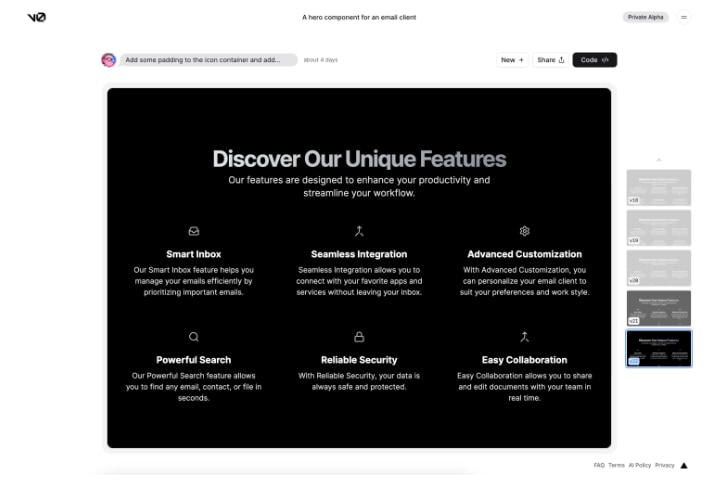
1. v0: An AI-generated UI system developed by Vercel that aims to simplify the development workflow by providing AI-crafted UI choices that can be customized or used as is.
2. Dprint: A robust command-line tool for automated code formatting developed in Rust, with a plugin architecture that allows for customization of code formatting tasks.
3. UK Gov Design System: A collection of reusable UI elements from the UK government's official website that offers valuable insights into accessibility and UI consistency.
4. Taxonomy: A sample Next.js project that showcases modern features like authentication, subscriptions, API routes, and static pages, serving as inspiration for setting up a full-stack Next.js application.
5. Medusa: A suite of open-source modules and tools designed to streamline the development of e-commerce applications, including online stores and marketplaces.
6. Dub: An open-source link management solution that simplifies the creation, sharing, and tracking of short links, featuring built-in analytics, QR code generation, and custom domain support.
7. Next SEO and Next Intl: Two libraries that simplify SEO metadata management and internationalization in Next.js applications respectively, enhancing website SEO and language support.
8. Nue.js: A lightweight JavaScript library that aims to simplify web development by eliminating complexities found in popular frameworks like React and Vue.
9. useHooks-ts: A library of custom React hooks crafted in TypeScript that provides utilities for common React development tasks.
10. Next Sitemap: A specialized tool for generating SEO-friendly sitemaps for Next.js projects, supporting various types of page rendering and offering customization options.
11. Superplate: A ready-to-use frontend boilerplate for React and Next.js, complete with TypeScript support and popular libraries, simplifying project setup and configuration.
12. Notion Avatar: An online tool that lets users create avatars similar to those found in Notion, with a multitude of customization options.
13. FloatUI: A collection of modern UI components and templates for React and soon for Vue, built with Tailwind CSS, speeding up development for projects of any scale.
14. Reactime: A Chrome Extension for enhancing debugging in modern React apps, featuring time-travel debugging and performance visualization.
15. OpenStatus: A self-hosted status page system built with Next.js, TailwindCSS, and shadcn/ui, offering real-time service health updates and integration with other monitoring tools.
16. Outstatic: A static site Content Management System (CMS) tailored for Next.js, providing a user-friendly interface and easy setup without external databases.
17. Peppermint: A self-hosted alternative to Zendesk with Markdown-based ticket creation and client history tracking, deployable using Docker and pm2.
18. Drift: A clone of GitHub Gist for self-hosting code and text snippets, supporting GitHub Extended Markdown, user authentication, and private or public posts.
19. ESLint Stylistic: A project that provides style-specific rules for ESLint and TypeScript-ESLint, keeping formatting and style rules separate from ESLint.
Overall, this roundup provides a comprehensive list of resources that can benefit web developers using Next.js and contribute to their overall development workflow and project success.
In this monthly roundup of valuable resources for web developers, the focus is on Next.js and its surrounding ecosystem. The article highlights a variety of tools, libraries, and updates that can elevate Next.js projects and keep developers ahead in the realm of front-end development.
Some of the noteworthy resources mentioned include:
1. v0: An AI-generated UI system developed by Vercel that aims to simplify the development workflow by providing AI-crafted UI choices that can be customized or used as is.
2. Dprint: A robust command-line tool for automated code formatting developed in Rust, with a plugin architecture that allows for customization of code formatting tasks.
3. UK Gov Design System: A collection of reusable UI elements from the UK government's official website that offers valuable insights into accessibility and UI consistency.
4. Taxonomy: A sample Next.js project that showcases modern features like authentication, subscriptions, API routes, and static pages, serving as inspiration for setting up a full-stack Next.js application.
5. Medusa: A suite of open-source modules and tools designed to streamline the development of e-commerce applications, including online stores and marketplaces.
6. Dub: An open-source link management solution that simplifies the creation, sharing, and tracking of short links, featuring built-in analytics, QR code generation, and custom domain support.
7. Next SEO and Next Intl: Two libraries that simplify SEO metadata management and internationalization in Next.js applications respectively, enhancing website SEO and language support.
8. Nue.js: A lightweight JavaScript library that aims to simplify web development by eliminating complexities found in popular frameworks like React and Vue.
9. useHooks-ts: A library of custom React hooks crafted in TypeScript that provides utilities for common React development tasks.
10. Next Sitemap: A specialized tool for generating SEO-friendly sitemaps for Next.js projects, supporting various types of page rendering and offering customization options.
11. Superplate: A ready-to-use frontend boilerplate for React and Next.js, complete with TypeScript support and popular libraries, simplifying project setup and configuration.
12. Notion Avatar: An online tool that lets users create avatars similar to those found in Notion, with a multitude of customization options.
13. FloatUI: A collection of modern UI components and templates for React and soon for Vue, built with Tailwind CSS, speeding up development for projects of any scale.
14. Reactime: A Chrome Extension for enhancing debugging in modern React apps, featuring time-travel debugging and performance visualization.
15. OpenStatus: A self-hosted status page system built with Next.js, TailwindCSS, and shadcn/ui, offering real-time service health updates and integration with other monitoring tools.
16. Outstatic: A static site Content Management System (CMS) tailored for Next.js, providing a user-friendly interface and easy setup without external databases.
17. Peppermint: A self-hosted alternative to Zendesk with Markdown-based ticket creation and client history tracking, deployable using Docker and pm2.
18. Drift: A clone of GitHub Gist for self-hosting code and text snippets, supporting GitHub Extended Markdown, user authentication, and private or public posts.
19. ESLint Stylistic: A project that provides style-specific rules for ESLint and TypeScript-ESLint, keeping formatting and style rules separate from ESLint.
Overall, this roundup provides a comprehensive list of resources that can benefit web developers using Next.js and contribute to their overall development workflow and project success.
Read Full Article | Article Summary


Comments
Post a Comment